
About West Java
An Overview of West Java
West Java, a province located in the western part of the Indonesian archipelago, is renowned for its rich cultural heritage and diverse geography.
Bordered by the Java Sea to the north and the Indian Ocean to the south, West Java is characterized by its mountainous landscapes, fertile plains, and extensive coastal areas. This region plays a pivotal role in Indonesia’s socio-economic landscape, making it one of the most significant provinces in the country.
The capital city of West Java, Bandung, is often recognized as a central hub for education, technology, and commerce. Situated approximately 180 kilometers southeast of Jakarta, Bandung’s elevation provides a cooler climate compared to the surrounding areas, making it an attractive destination for both tourists and residents. The city is also known for its vibrant arts scene, culinary delights, and historical significance, featuring colonial-era architecture alongside modern developments.
West Java’s economy is diverse, with agriculture, manufacturing, and tourism serving as the key pillars. The fertile volcanic soils enable the cultivation of various cash crops, contributing significantly to the local and national economy. As a major cultural melting pot, the province is home to an array of ethnic groups, languages, and traditions, showcasing the rich tapestry of Indonesian culture. This diversity is reflected in its festivals, crafts, and culinary practices, which draw visitors from across the archipelago and beyond.
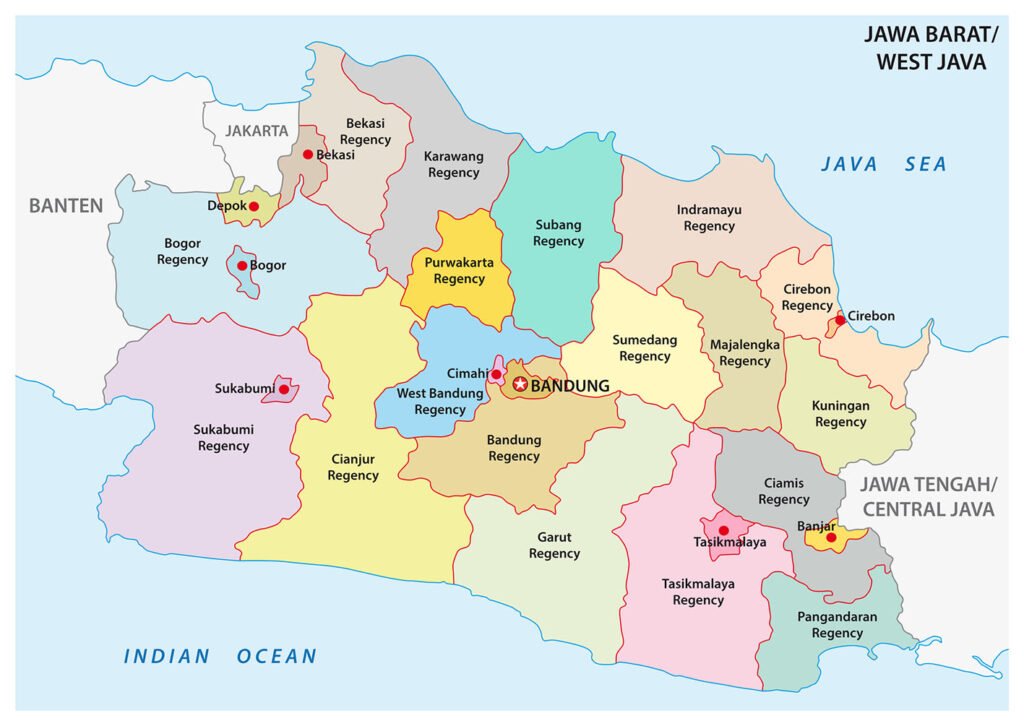
Map of West Java
A Brief History of West Java
West Java has a rich and varied history that dates back to ancient times. The area was originally inhabited by various indigenous tribes who established settlements and were primarily engaged in agriculture and trade. Archaeological evidence suggests the presence of early Sundanese cultures, which played a crucial role in the development of regional identities.
One of the most notable historical entities in West Java was the Sunda Kingdom, established around the 7th century. The Sunda Kingdom flourished until the 16th century, becoming a significant cultural and political power. It promoted the development of local culture, including Sundanese arts, literature, and language, which continue to influence the province's identity today. The kingdom is particularly renowned for its unique architectural style as seen in religious sites such as Candi Borobudur, which, although not located in West Java, reflects the broader cultural exchanges of the time.
The arrival of foreign powers significantly altered the historical landscape of West Java during the colonial era. The Portuguese were among the first Europeans to arrive, followed by the Dutch, who established a firm grip over the region in the 17th century. Under Dutch colonial rule, West Java was integrated into their economic system, leading to significant developments in agriculture and infrastructure, but also resulting in major social changes and unrest among the local population.
Throughout the early 20th century, West Java played a pivotal role in the Indonesian independence movement. Nationalist sentiments were fervently expressed, culminating in the declaration of independence in 1945. As a result, West Java not only became a vital center for political activism but also a symbol of cultural pride as the region sought to reclaim its identity post-colonialism. This historical trajectory has significantly shaped modern West Java, leaving an indelible mark on its culture and society.
Geography and Natural Features
West Java is a region celebrated for its stunning geographic diversity, characterized by a combination of mountains, plateaus, and coastal areas that create an extraordinary landscape. This Indonesian province is situated on the western part of the island of Java, bordered by the Indian Ocean to the south and the Java Sea to the north. The diverse topography is prominently marked by volcanic mountains, notably the well-known Gunung Ceremai and Gunung Tangkuban Perahu. These towering peaks not only offer breathtaking views but also serve as crucial ecosystems supporting a wide variety of flora and fauna.
The region features several national parks, including the renowned Gunung Gede Pangrango National Park, which is a sanctuary for endemic species and is rich in biodiversity. The park is home to numerous hiking trails that attract nature enthusiasts and adventurers alike. The lush rainforests, cascading waterfalls, and alpine meadows present within these natural reserves underline the ecological significance of West Java's geography. Additionally, the region's fertile volcanic soil contributes significantly to its agricultural prowess, allowing for the cultivation of crops such as tea, coffee, and various fruits.
Moving towards the coast, West Java is endowed with idyllic beaches and coastal wetlands. The coastal areas not only provide stunning vistas but also foster a thriving fishing industry and support various economic activities. Furthermore, the region boasts unique biodiversity, with many marine species residing in its waters, which are protected under various conservation efforts. The geological formations, including limestone hills and unique rock structures, enhance the allure of West Java's natural landscape. Overall, the geography of West Java is a vital element that shapes its cultural identity and agricultural productivity, making it a critical province in Indonesia's ecological framework.
Climate of West Java
West Java is characterized by a tropical climate, which significantly influences both the lifestyle and agricultural practices of its inhabitants. The province experiences a high level of humidity and consistent rainfall throughout the year, creating an environment that supports diverse ecosystems and agricultural activities. Typically, the climate in West Java can be classified into two main seasons: the wet season and the dry season. The wet season generally occurs from November to March, bringing substantial rainfall, while the dry season spans from April to October, marked by relatively lower precipitation.
Rainfall patterns in West Java are variable, with coastal regions often experiencing moderate rain compared to the more mountainous interiors, where the precipitation may be considerably higher. This rainfall is crucial for rice cultivation, which is a staple crop in the region. However, the intense rain can also lead to flooding, affecting local communities and agricultural production. Temperature fluctuations throughout the year tend to remain minimal, generally averaging between 24 to 30 degrees Celsius. The higher altitudes of the mountainous areas experience cooler temperatures, which influence the types of crops that can be grown, as well as the overall lifestyle of people living in these regions.
The tropical climate of West Java not only creates a unique natural environment but also affects the daily life of its residents. Activities such as farming and local markets are often scheduled around the prevailing weather conditions, demonstrating the integral relationship between climate, agriculture, and society. In summary, the characteristically tropical climate of West Java plays a pivotal role in shaping the province's agricultural landscape and the daily lives of its people, reflecting the complexities of living in such a vibrant ecosystem.
Demographics and Population Diversity
West Java is home to a diverse population characterized by various ethnic groups and languages. As of the latest census, the province boasts a population exceeding 50 million, making it one of the most densely populated areas in Indonesia. This significant population density can be attributed to historical migration patterns, urbanization trends, and the province's economic opportunities.
The dominant ethnic group in West Java is the Sundanese, who comprise a significant majority of the population. This indigenous group has a rich cultural heritage, evident in their traditional music, dance, and cuisine. Alongside the Sundanese, other ethnic communities, including Javanese, Batak, and Chinese minorities, contribute to the cultural fabric of the region. Each of these groups brings their customs and practices, enriching West Java's cultural identity.
Language diversity is also a notable feature of the province's demographics. The primary language spoken is Sundanese, which varies regionally in its dialects. Indonesian, as the national language, is widely spoken, enabling communication across different ethnic groups. Furthermore, the presence of immigrant communities has introduced additional languages, such as Mandarin and various regional dialects from other parts of Indonesia.
The cultural diversity evident in West Java can also be observed in its religious practices. The province has a predominantly Muslim population, but there are also adherents of Christianity, Hinduism, and other faiths. This religious plurality contributes to the region's vibrant cultural landscape and social dynamics.
West Java's demographics illustrate a complex mix of ethnicities, languages, and cultures, reflecting both a rich indigenous heritage and the influences of immigration. This diversity not only shapes the daily lives of its residents but also contributes to the region's unique social and cultural identity.
Economy of West Java
West Java boasts a robust and diverse economy that is integral to Indonesia's overall economic landscape. The province is one of the most populous areas in the country, contributing significantly to agricultural, manufacturing, and tourism sectors. Agriculture holds a prominent position in West Java's economy, with a wide variety of crops cultivated in its fertile volcanic soil. Rice, which is the staple food for many Indonesians, along with tea, fruits, and vegetables, forms the backbone of the agricultural industry. The farming practices in this region are vital for local food security and provide employment for a considerable proportion of the populace.
Manufacturing is another critical sector within West Java’s economic framework. The province is well-known for its textile, automotive, and food processing industries. The presence of a skilled labor force and a favorable investment climate has attracted both domestic and foreign investments, leading to the establishment of numerous industrial zones. This growth not only contributes to economic stability but also facilitates job creation, enabling a higher standard of living for the residents.
West Java's rich cultural heritage and natural beauty position it as a prime destination for tourism. Popular areas such as Bandung and the cultural sites around Puncak draw visitors both nationally and internationally. This influx of tourists provides a significant boost to the local economy, supporting small businesses and promoting the growth of service-oriented industries. However, urbanization poses challenges, as rapid development can strain infrastructure and resources. As cities expand, it is crucial to strike a balance between economic growth and sustainable practices to ensure that local communities can thrive alongside modern advancements.
Cultural Heritage and Traditions
West Java, a region steeped in history and tradition, is home to a diverse array of cultural expressions that reflect its rich heritage. Traditional arts and crafts play a pivotal role in this cultural landscape, with batik, a renowned textile art, being one of the most notable. Batik from West Java is characterized by vibrant colors and intricate patterns, often depicting nature and local stories. The process involves a meticulous application of wax to resist dye, culminating in visually stunning fabrics that are deeply symbolic and culturally significant.
Music and dance are integral to the cultural identity of West Java. The Sundanese people, who inhabit the region, have developed distinctive musical styles characterized by the use of traditional instruments such as the angklung and gamelan. These ensembles produce harmonious melodies that accompany various ceremonies and celebrations. Dance forms, such as Jaipong, not only embody artistic expression but also serve as a means of storytelling, often narrating historical and mythical tales that resonate with the community’s ancestral values.
Cultural festivals further enhance the vibrancy of West Java’s heritage, providing a platform for the community to come together to celebrate their traditions. Events such as the Saung Angklung Udjo showcase the region’s musical heritage and promote cultural awareness among both locals and tourists. These festivals are crucial for the preservation of ancestral practices, ensuring that the memories and rituals associated with them endure through generations. The collective experience fosters community bonds and instills a sense of pride in one's cultural identity.
Rituals and traditions also manifest in daily life, often intertwined with agricultural practices and local customs, reinforcing the connection between the people and their land. This cultural interweaving highlights West Java's role as a bastion of tradition in a rapidly modernizing world, where the preservation of heritage remains vital for sustaining the social fabric of the region.